
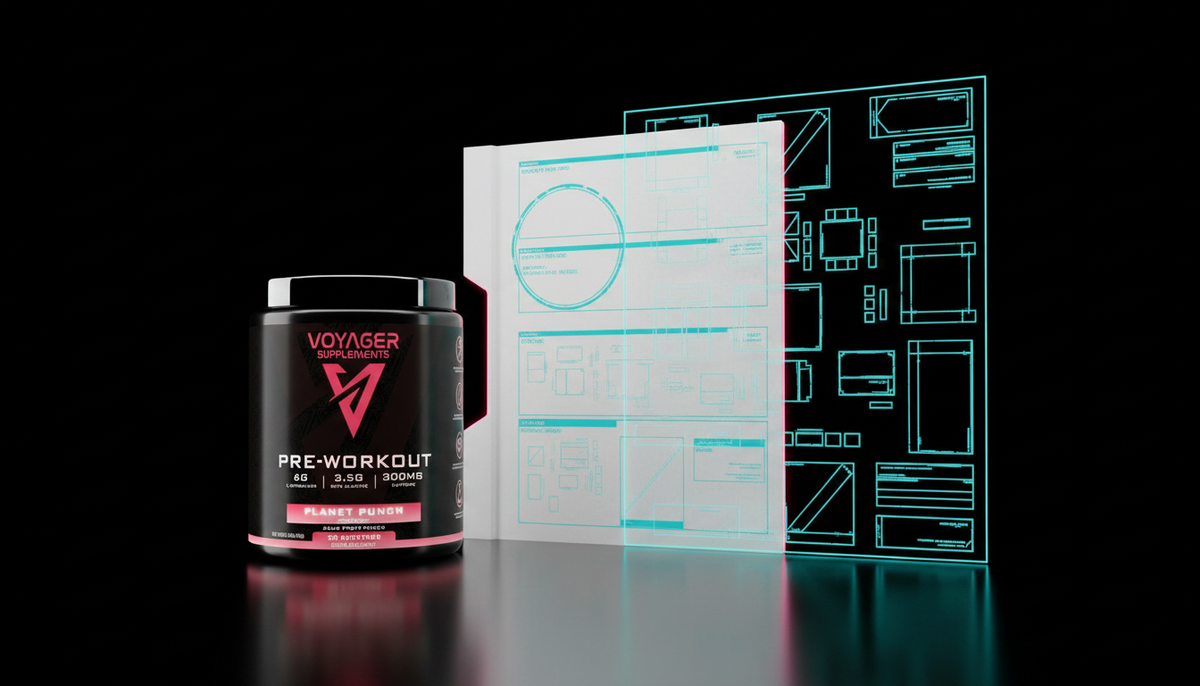
The front of a supplement tub is marketing. That is not a criticism; it is what the front is for. The back is where you learn what the product actually is.
1. Start with serving size
Before you look at any ingredient, find the serving size. One scoop? Two scoops? Is there a separate “maximum” dose in the directions? This determines how many real workouts the tub represents.
2. Check the stimulant load
Look for caffeine and any other stimulant ingredients. Do not assume the largest number is the best formula. Caffeine tolerance is individual, and stacking multiple stimulant products can push total intake much higher than expected.
3. Look for exact active amounts
A proprietary blend can list ingredients without showing how much of each one is included. A fully disclosed formula gives you a better chance to compare products ingredient by ingredient.
4. Separate ingredient count from formula quality
A longer Supplement Facts panel is not automatically better. Every additional compound creates another dose, interaction, and tradeoff to understand. We would rather use a focused stack with transparent amounts than add ingredients simply because they are trendy.
5. Compare cost per full-use serving
Price per tub is not enough. Divide the price by the number of servings you would actually use at your intended dose. If a 40-serving tub becomes 20 uses at the higher serving direction, compare it that way.
6. Read the directions and warnings
The label directions matter just as much as the ingredient panel. They tell you how the manufacturer expects the product to be used and whether there are tolerance or timing considerations.
The Voyager rule
We want the label to make the purchase decision easier, not harder. One scoop equals one full serving, active amounts are disclosed, and the serving count reflects the number of full servings in the tub.
FIELD NOTE: The best pre-workout is not the one with the loudest front label. It is the one whose formula, dose, and stimulant level actually fit the way you train.